
I get this question a lot. A business owner will say, "Can't I just tell ChatGPT to make me a website? It's free. It writes code. What's the catch?"
It's a fair question. If you've played with ChatGPT, you know it can write essays, answer questions, even generate code. So why not a website?
The short answer: it can give you something. Whether that something is good enough to represent your business is a different conversation entirely. And that's what this post is really about—not just whether AI can spit out a web page, but whether your website is something you should hand off to a chatbot in the first place.
What ChatGPT Can Actually Do
Let's be fair to the technology. ChatGPT can:
- Generate HTML and CSS code. You can describe what you want—"a homepage for a plumbing company with a blue header and a contact form"—and it'll produce code.
- Write placeholder text. Need an "About Us" section? It'll draft one.
- Suggest layouts and structure. It knows common website patterns (hero section, services grid, testimonials, footer).
- Help with small tasks fast. Need a button styled a certain way? A table formatted? It's genuinely useful for bits and pieces.
For a developer who already knows what they're doing, AI is a powerful assistant. It speeds things up. It handles the repetitive stuff.
But here's what a TechRadar reviewer found after spending 3 hours trying to build a full site with ChatGPT: the result was "nothing a basic website builder wouldn't be able to do much faster," and the whole process "took a lot of time and effort to get it where I wanted it."
In other words: ChatGPT can help, but it's not the shortcut it seems.
The Problems Nobody Talks About
Getting ChatGPT to produce some code is the easy part. The hard part is everything that comes after.
You still need to host it somewhere
ChatGPT gives you code. It doesn't give you a live website. You still need a domain name, a hosting account, SSL certificates, and the technical know-how to upload, configure, and maintain everything. If terms like "domain vs. hosting" already make your eyes glaze over, you're looking at a steep learning curve before anything goes live.
It looks generic—because it is
AI generates patterns it's seen before. That means your plumbing website looks like every other AI-generated plumbing website. No personality. No local flavor. Nothing that says "this is a real business in Arroyo Grande run by a real person."
And that matters. 75% of people judge your business's credibility by your website design. In fact, 94% of first impressions are design-related. If your site looks like it was generated in 30 seconds (because it was), visitors notice.
The content is... fine. Just fine.
ChatGPT writes competent filler. But "competent filler" isn't what convinces someone to call you instead of your competitor. Your website copy should sound like you, reflect your actual experience, and speak directly to the people in your community. AI doesn't know that your best customers are retirees in Grover Beach or that your plumbing business has been family-owned since 1998. It just writes generic marketing speak.
The Accessibility Problem (This One's Serious)
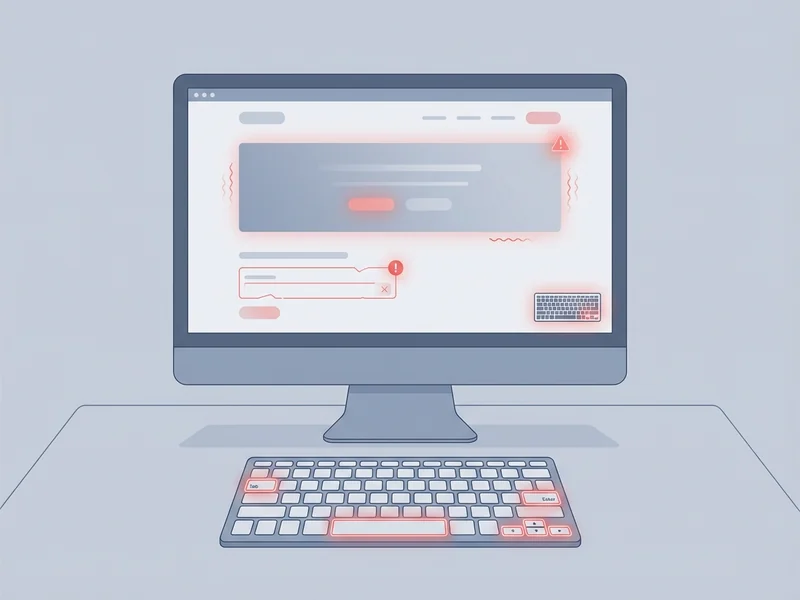
Here's something most people don't think about until it's too late: website accessibility. Your website needs to work for everyone, including people who use screen readers, have low vision, or navigate with a keyboard instead of a mouse.
This isn't optional—especially in California. ADA website accessibility lawsuits surged 37% in the first half of 2025, with over 2,000 filed in just six months. And this isn't just a big-company problem: 64% of businesses sued make less than $25 million a year. Small businesses are the primary targets.
So how does ChatGPT handle accessibility? Not well.
A peer-reviewed study from January 2025 tested ChatGPT's default web code and found serious problems: color contrast ratios as low as 1.71:1 (the minimum required is 4.5:1), missing page structure elements that screen readers need, forms without proper labels, and no keyboard navigation support. The researchers needed over 200 rounds of back-and-forth to get the code up to standard.
That's not a small problem. 94.8% of the top million websites already fail basic accessibility standards. If you're building with a tool that doesn't understand accessibility by default, you're starting behind the starting line.
If you're a business owner in California, this should make you think twice about handing your website to an AI chatbot and calling it done.
What Happens After Launch Day?
Let's say you power through all the problems above. You get ChatGPT to generate code, figure out hosting, upload it, and your site goes live. Now what?
- Who updates it when your hours change? You'll need to edit the code yourself, or go back to ChatGPT and hope it remembers what it built.
- Who fixes it when something breaks? Browsers update. Security vulnerabilities pop up. Things stop working. (We wrote about this in "What happens when your website breaks"—it's worth a read.)
- Who makes sure it keeps working on new phones and browsers? What looks fine today might not work in six months.
- Who handles your SEO? Getting found on Google is an ongoing effort, not a one-time setup. And with only 8% of users clicking traditional links when Google shows an AI summary, you need every advantage you can get.
A website isn't a project you finish. It's a tool you maintain. And ChatGPT doesn't maintain anything. It generates, and then it's done. The ongoing work—the part that actually determines whether your website helps your business—is entirely on you. (This is the real reason most small business websites never get updated.)
Your Website Deserves More Than a Quick Prompt
Here's the thing nobody says in the "AI can do everything" hype cycle: your website is one of the most important tools your business owns.
Think about it. When someone hears about your business—from a friend, a Google search, a sign on the road—the first thing they do is look you up online. They form an opinion in 50 milliseconds. Less than the blink of an eye.
That's not a moment you want to leave to a chatbot.
Your website communicates:
- Whether you're legitimate. Does this business actually exist? Are they professional? Or does this look sketchy?
- Whether you care about details. If your website is sloppy, what does that say about your work?
- Whether you're the right fit. Does this feel like a business that serves people like me, in my community?
- Whether you're still in business. An outdated site with old information raises red flags fast.
A website that answers these questions well brings in customers. One that doesn't sends them to your competitor. And the hidden costs of cutting corners on your web presence are almost always more expensive than doing it right.
When AI Makes Sense (And When It Doesn't)
I'm not anti-AI. I use AI tools every day in my work. The question isn't whether AI is useful—it is. The question is: useful for what?
AI makes sense when:
- A professional is using it to speed up their workflow
- You need a quick prototype or proof of concept
- You're brainstorming ideas and need a starting point
- You have technical skills and want to move faster
AI doesn't make sense when:
- You have no technical background and no one to review the output
- You need a site that represents a real business to real customers
- Accessibility, SEO, and ongoing maintenance matter (they do)
- You need someone to call when something goes wrong
The best analogy I've heard: asking ChatGPT to build your business website is like asking it to write your wedding vows. It'll produce something. It might even sound okay. But is that really what you want representing the most important moment?
What YouGrow Does Differently
We use modern tools (including AI, where it helps) to build websites for local businesses. But the difference is that a real person—me, Onur, right here in Arroyo Grande—is making the decisions. Checking the accessibility. Writing copy that sounds like your business, not a chatbot. Handling your hosting, your security, your updates, forever.
$99/month. Everything included. You never touch it. When you need something changed, you email or call me directly at 805-439-6288. That's it.
If you're curious what a managed website service actually looks like, or want to understand what a website should really cost, we've written about both.
Or just give me a call. I'm happy to answer any questions—no pitch, no pressure. Just a neighbor helping out.